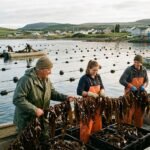

As ocean temperatures rise and marine ecosystems respond to climate change, fish populations are shifting their geographic ranges at an unprecedented pace. Species once concentrated in predictable fishing grounds are moving poleward or into deeper waters, crossing national boundaries and disrupting long-established fisheries management systems. These climate-driven migrations are challenging the foundation of national fishing quotas, forcing governments, regulators, and industry stakeholders to rethink how access, allocation, and sustainability are managed in a rapidly changing ocean.
Climate Change and Shifting Fish Distribution
For decades, fishing quotas were set using historical catch data and stable stock patterns. But climate change is disrupting this balance. Warmer waters, shifting currents, oxygen changes, and altered plankton levels are changing marine habitats, pushing many species to move toward cooler or more suitable areas, sometimes across national borders. Fish such as cod, mackerel, tuna, and squid are now appearing in regions where they were once uncommon. This creates governance challenges, as quotas still reflect old distributions rather than current conditions. Countries gaining new stocks may seek larger shares, while others face losses, complicating negotiations and increasing the risk of overfishing as management systems struggle to keep pace.
The Strain on Traditional Quota Systems
When Fish Move, but Rules Do Not
Quota systems are typically negotiated through long-standing agreements that assume predictable stock behavior. Climate-driven migration undermines this assumption. As fish move across borders, countries that previously relied on certain stocks may see declining access, while neighboring nations experience unexpected increases, creating tensions over allocation rights and resource ownership. This shift can strain diplomatic relations and complicate the work of regional fisheries management organizations, which must balance conservation goals with competing national interests. In some cases, delays in updating quota arrangements may lead to overfishing, as fleets race to secure access to newly available stocks. Adapting governance frameworks to reflect real-time scientific data and changing ecosystems is becoming essential for maintaining both sustainability and international cooperation.
Emerging Conflicts and Policy Challenges
Competing Claims Over Moving Stocks
Climate-driven redistribution has already led to disputes between nations over shared or newly arrived stocks. When fish populations shift faster than policy frameworks can adapt, disagreements over quota shares, access rights, and enforcement responsibilities intensify. These challenges are particularly acute in regions with shared waters or semi-enclosed seas, where cooperation is essential but often politically complex. As scientific assessments struggle to keep pace with rapid ecological change, uncertainty over stock size and migration patterns can further fuel mistrust among neighboring states. This situation increases the risk of unilateral fishing actions, weakened compliance, and pressure on already stressed fish populations. Strengthening data sharing, joint monitoring, and adaptive management agreements is becoming critical to prevent conflicts and support sustainable use of shifting marine resources.
Scientific Uncertainty and Management Complexity
Climate change is adding new layers of uncertainty to fisheries management, particularly in how stock assessments are conducted. Traditional assessment models often have difficulty capturing rapid shifts in species distribution, changes in recruitment patterns, and evolving ecosystem relationships. In response, fisheries managers are turning toward more adaptive scientific approaches that incorporate real-time data, continuous monitoring, and ecosystem-based assessment methods. These tools help decision-makers adjust quota allocations more effectively under changing environmental conditions and improve the ability to manage fish populations that are no longer confined to historical ranges.
Toward Adaptive and Flexible Quota Frameworks
Rethinking Allocation Models
One key lesson from recent years is the need for flexibility. Static quota systems are poorly suited to dynamic ecosystems. Emerging approaches include:
- Adaptive quota sharing: Adjusting allocations based on current stock distribution
- Dynamic management zones: Allowing quotas to move with fish populations
- Shorter review cycles: Updating agreements more frequently to reflect environmental change
These strategies aim to balance ecological reality with economic stability.
Implications for Fishing Communities and Industry
Climate-driven shifts in fish distribution are creating uneven economic outcomes across regions. Communities that have long depended on traditional stocks may experience declining catches, income loss, and growing financial uncertainty. At the same time, areas where new species are appearing must quickly build the infrastructure, regulatory systems, and workforce skills needed to manage emerging fisheries effectively. These imbalances underline the need for transition support, targeted investment, and workforce adaptation strategies to help affected regions adjust and maintain economic stability.
The Role of International Cooperation
Shared Solutions for Shared Stocks
As fish ignore political boundaries, international cooperation becomes increasingly critical. Regional fisheries management organizations (RFMOs) and bilateral agreements play a central role in negotiating adaptive quota arrangements and preventing overexploitation. Collaborative data sharing and joint scientific assessments are essential to managing migrating stocks sustainably. Strengthening transparency, harmonizing monitoring and enforcement measures, and building trust among participating countries help ensure that management decisions are based on shared evidence rather than competing claims. Flexible governance mechanisms that allow quotas and access rules to be updated more frequently are also becoming necessary as ecological conditions change. Without coordinated action, fragmented policies could undermine conservation efforts and increase the risk of conflict over shifting marine resources.
Environmental and Sustainability Considerations
Avoiding a Race to Fish
Without adaptive governance, shifting stocks risk being overfished as nations rush to capitalize on new opportunities. Climate-informed quota systems help prevent this outcome by aligning access with conservation objectives. Integrating climate projections into fisheries management is now seen as a core requirement for long-term sustainability. This approach allows managers to anticipate distribution changes rather than reacting only after stocks decline or conflicts emerge. It also supports more precautionary decision-making, helping to buffer ecosystems against sudden shocks and variability. By linking scientific forecasting with flexible policy tools, countries can better balance economic interests with the need to protect marine resources for future generations.
Economic and Strategic Outlook
Climate-driven shifts in fish distribution are forcing the seafood industry to plan for a resource that is no longer geographically fixed. This means greater flexibility in fleet deployment, capital investment, and market strategies as stock availability changes over time. Companies that monitor environmental trends and work proactively with regulators are better prepared to adjust operations and reduce risk. At the same time, national quota systems that adapt in line with ecological changes will be essential for maintaining stable seafood supplies and supporting long-term industry resilience.
Conclusion
Climate-driven fish migration is fundamentally reshaping how national fishing quotas are defined and enforced. As fish stocks move beyond historical boundaries, static allocation systems are giving way to more adaptive, science-based approaches. Successfully navigating this transition will require cooperation, flexibility, and a willingness to rethink long-standing management assumptions in the face of a changing ocean.
Photo by Yana Gorbunova on Unsplash