The global aquaculture industry faces a critical challenge: securing sustainable sources of fishmeal to meet the nutritional demands of farmed fish populations. Traditional fishmeal production, derived from wild-caught fish species, has become increasingly unsustainable due to overfishing, environmental degradation, and rising costs. As the aquaculture sector continues to expand to meet growing seafood demand, the industry must explore innovative alternatives that can provide equivalent nutritional value while reducing environmental impact. Two promising solutions have emerged as game-changers in sustainable aquaculture: insect-based proteins and algae-derived supplements.
The Current Fishmeal Challenge
Fishmeal has long served as the primary protein source in aquaculture feed, prized for its high nutritional density and essential amino acid profile. However, this reliance presents significant sustainability concerns. The production of fishmeal requires substantial quantities of wild-caught fish, contributing to ocean depletion and ecosystem imbalance. Additionally, fluctuating commodity prices and supply chain vulnerabilities have made fishmeal an economically unreliable ingredient for fish farming operations worldwide.
Current estimates suggest that approximately 90% of global fishmeal production is used in aquaculture, creating a circular dependency that threatens the very sustainability of the industry. As regulations tighten and environmental consciousness increases, alternative protein sources have become not merely advantageous but essential for the future of responsible aquaculture.
Insect Proteins: A Revolutionary Alternative
Nutritional Profile and Benefits
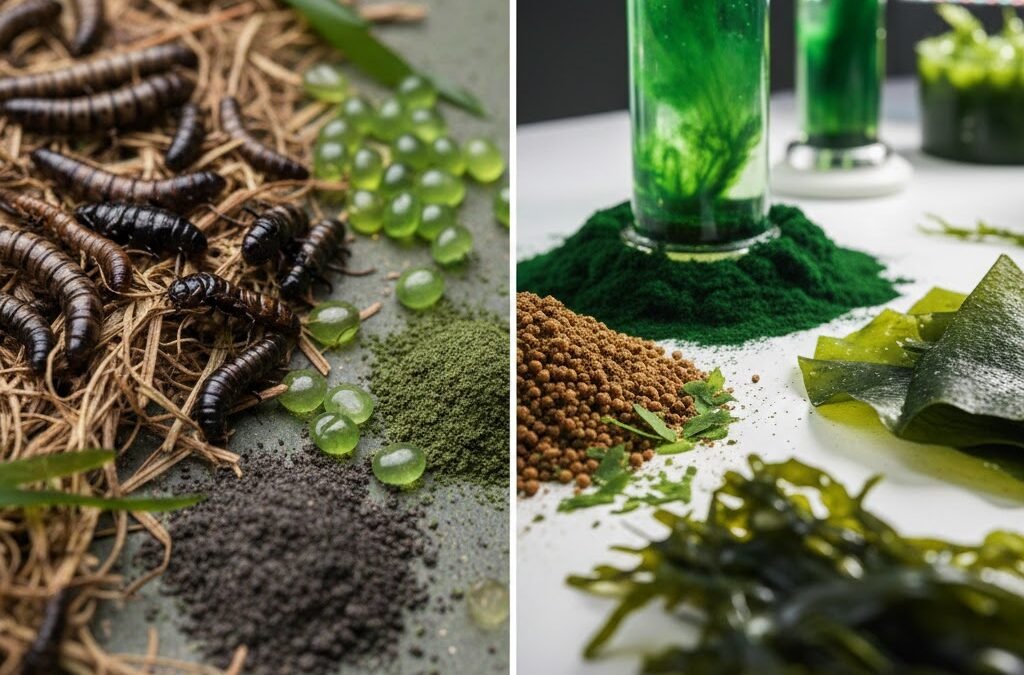
Insect-based proteins, particularly those derived from species such as black soldier fly larvae, mealworms, and crickets, have demonstrated remarkable potential as fishmeal substitutes. These insects contain:
- High-quality proteins with amino acid profiles comparable to traditional fishmeal
- Essential fatty acids, including omega-3 and omega-6 polyunsaturated fats
- Bioavailable minerals such as phosphorus, zinc, and iron
- Natural chitin, which may enhance intestinal health and immune function in fish
Research has consistently shown that farmed fish species, including salmon, trout, and tilapia, accept insect-derived proteins readily and demonstrate normal growth rates when fed diets incorporating insect meal. This acceptance eliminates a major barrier to commercial adoption.
Production Efficiency and Sustainability
Insect farming offers remarkable advantages in terms of resource efficiency and environmental footprint. Unlike traditional aquaculture or land-based livestock farming, insect production requires significantly less water, feed, and space while generating minimal waste. The conversion efficiency of insects—the amount of feed required to produce one kilogram of protein—far exceeds that of conventional livestock, making insect farming an exceptionally sustainable protein source.
Furthermore, insects can be reared on organic waste streams and by-products from food processing industries, creating a circular economy model that transforms waste into valuable aquaculture feed. This approach not only reduces production costs but also addresses waste management challenges across multiple industries simultaneously.
Regulatory Status and Market Development
The regulatory landscape for insect-based aquaculture feeds continues to evolve favorably. The European Union has approved specific insect species for use in aquaculture feeds, and other regions are following suit. Numerous companies have invested in scaling insect farming operations to meet anticipated demand, signaling confidence in this emerging sector’s commercial viability.
Algae-Based Solutions
Nutritional Advantages
Microalgae and macroalgae represent another compelling avenue for sustainable aquaculture nutrition. These organisms offer several distinct nutritional benefits:
- Complete protein sources containing all essential amino acids required by farmed fish
- Rich concentrations of omega-3 polyunsaturated fatty acids (EPA and DHA), particularly in marine microalgae
- Natural pigments such as astaxanthin and carotenoids that enhance fish coloration and flesh quality
- Vitamins, minerals, and bioactive compounds with potential immunomodulatory properties
- Prebiotic compounds that support beneficial intestinal microbiota
The nutritional composition of algae, particularly marine microalgae species, closely mirrors that of wild fish populations, creating a feed ingredient that naturally supports the health and development of cultured fish species.
Environmental and Economic Benefits
Algae cultivation represents perhaps the most environmentally benign aquaculture supplement available. Unlike conventional agriculture, algae farming requires no pesticides, fertilizers, or arable land. Open-pond or photobioreactor systems can be established in diverse geographical locations, including arid regions unsuitable for traditional agriculture. Moreover, algae cultivation actively sequesters carbon dioxide and produces oxygen, contributing to climate change mitigation while generating valuable feed ingredients.
The economic case for algae-based feeds strengthens as production technologies advance and scale increases. Current research focuses on reducing production costs through optimization of cultivation systems and development of cost-effective harvesting and processing methodologies.
Integration into Feed Formulations
Current evidence suggests that optimal results are achieved through partial replacement of fishmeal with algae-derived ingredients rather than complete substitution. Fish fed diets incorporating 10-30% algae meal demonstrate excellent growth performance while gaining the nutritional advantages these ingredients provide. This gradual transition approach allows for smooth industrial adoption while ensuring consistent fish health and productivity.
Comparative Analysis: Insects vs. Algae
Both insects and algae present compelling advantages, with their relative suitability depending on specific operational and market considerations:
- Production Timeline: Insects mature rapidly (weeks to months), enabling faster return on investment, while algae cultivation cycles vary by species and system design.
- Nutrient Profile: Insects excel in protein and fat content, while algae surpass insects in omega-3 fatty acids and bioactive compounds.