Commercial fishing harbors represent dynamic and challenging work environments where safety must be the paramount concern. Dock safety encompasses a comprehensive range of protocols, practices, and procedures designed to protect workers, vessels, cargo, and the surrounding infrastructure from accidents and injuries. This guide provides essential information for anyone working in or visiting commercial fishing harbor facilities.
The Importance of Dock Safety
Commercial fishing docks operate continuously, often in challenging weather conditions and with heavy machinery in constant use. The convergence of water, moving equipment, slippery surfaces, and heavy loads creates an inherently hazardous environment. Proper dock safety practices significantly reduce the risk of injuries, fatalities, property damage, and operational disruptions that can affect the entire fishing industry supply chain.
Key Hazards in Commercial Fishing Harbors
Understanding the specific hazards present in fishing harbors is the first step toward effective risk management. Workers and visitors should be aware of the following primary dangers:
- Water-Related Hazards: Falls into water, currents, and cold water immersion pose significant risks to dock workers and crew members.
- Heavy Equipment Operation: Cranes, forklifts, and other machinery operate continuously, creating collision and crushing hazards.
- Slippery Surfaces: Fish waste, ice, moisture, and algae make dock surfaces extremely slippery, increasing fall risk.
- Cargo Hazards: Improperly secured loads can shift, fall, or create entanglement risks for workers.
- Confined Space Entry: Storage holds and cargo compartments may contain hazardous atmospheres or insufficient oxygen.
- Weather Conditions: High winds, heavy rain, and fog reduce visibility and stability.
- Noise Exposure: Equipment operation produces dangerous noise levels that can cause permanent hearing damage.
Personal Protective Equipment Requirements
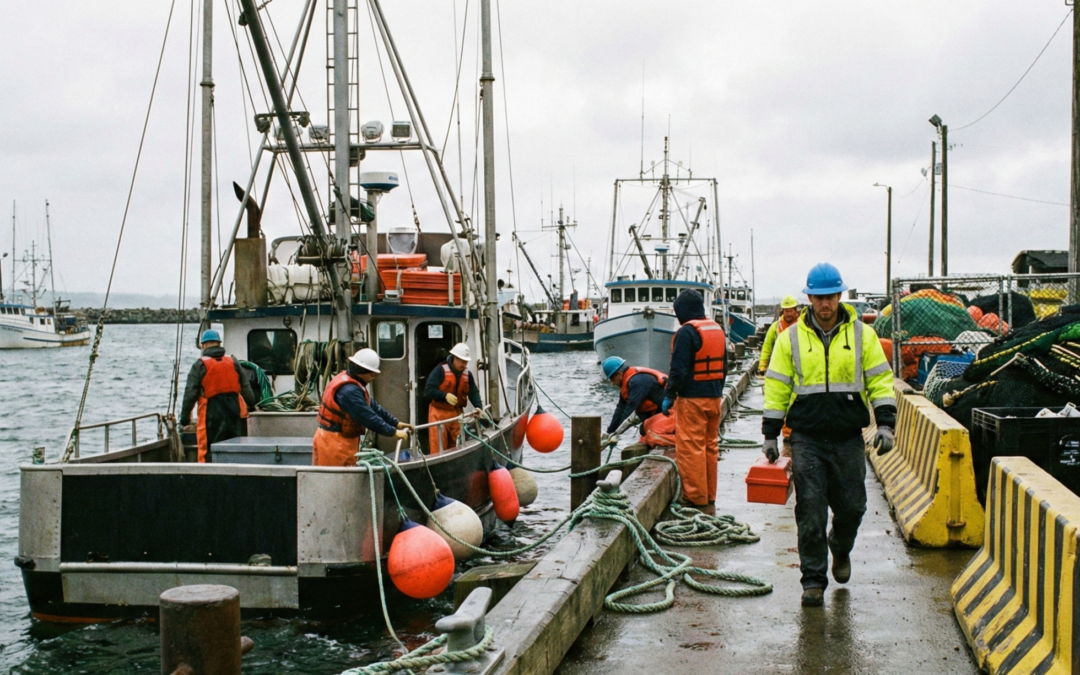
Appropriate personal protective equipment (PPE) is essential for protecting dock workers from environmental hazards. All individuals working on commercial fishing docks should wear or have immediate access to the following:
- Hard hats or protective headgear to prevent head injuries from falling objects
- High-visibility clothing to ensure workers remain visible to equipment operators
- Non-slip, steel-toed boots with proper ankle support
- Work gloves suitable for wet conditions and handling fish products
- Hearing protection devices when noise levels exceed safe thresholds
- Life jackets or personal flotation devices when working near water edges
- Eye protection when working with chemicals or debris
- Respiratory protection when working in areas with poor air quality
Vessel Mooring and Positioning Safety
Proper vessel mooring and positioning is fundamental to dock safety. Vessels must be secured correctly using appropriate lines, bollards, and cleats. Regular inspections of mooring equipment should occur before and during loading or unloading operations. Workers should maintain awareness of vessel movement and never position themselves in areas where shifting vessels could cause injury. When vessels are moored, clear communication between deck crew and dock workers prevents accidents during cargo transfer operations.
Cargo Handling Best Practices
Cargo handling represents one of the most dangerous aspects of dock operations. To ensure safety during loading and unloading:
- Inspect all cargo nets, straps, and securing equipment before use
- Never exceed weight limits on dock equipment or cargo containers
- Ensure cargo is properly balanced and secured before movement begins
- Maintain clear communication between dock supervisors and equipment operators
- Keep workers away from suspended loads and cargo transfer zones
- Properly stack cargo following weight distribution guidelines
- Use mechanical equipment rather than manual handling for heavy items whenever possible
Communication and Coordination Protocols
Effective communication is critical for preventing accidents in busy harbor environments. All dock personnel should follow established communication protocols including the use of hand signals, radio systems, and verbal confirmations. Supervisors must brief all workers on planned operations, potential hazards, and emergency procedures before work begins. Clear signage should mark hazardous areas, equipment restrictions, and safety zones. Regular safety meetings help reinforce procedures and allow workers to raise concerns about unsafe conditions.
Weather-Related Safety Considerations
Commercial fishing harbors are exposed to weather conditions that can rapidly change and create dangerous situations. During severe weather, operations should be curtailed or suspended entirely. High winds can destabilize vessels and make dock work extremely hazardous. Fog and reduced visibility increase the likelihood of accidents involving pedestrians and equipment. Icy conditions during winter months create additional slip and fall hazards. All dock personnel should monitor weather forecasts and be prepared to adjust operations as conditions change.
Equipment Maintenance and Inspection
Regular maintenance and inspection of dock equipment prevents failures that could cause accidents. Cranes, winches, forklifts, and other machinery should undergo scheduled maintenance by qualified technicians. Pre-operation inspections should occur daily to identify any visible damage or malfunction. Worn cables, frayed ropes, and damaged equipment should be removed from service immediately. Documentation of all maintenance and inspection activities creates a record of equipment reliability and helps identify recurring problems.
Emergency Preparedness and Response
Commercial fishing docks must have comprehensive emergency response plans. All personnel should receive training in emergency procedures, including evacuation routes, first aid, and response to water-related emergencies. Emergency equipment such as life rings, first aid kits, and rescue equipment must be readily accessible and regularly inspected. Designated emergency personnel should receive advanced training in water rescue and medical response. Regular emergency drills ensure that all workers understand their roles and can respond effectively when accidents occur.
Training and Competency Requirements
Workers in commercial fishing harbors require specialized training to perform their duties safely.