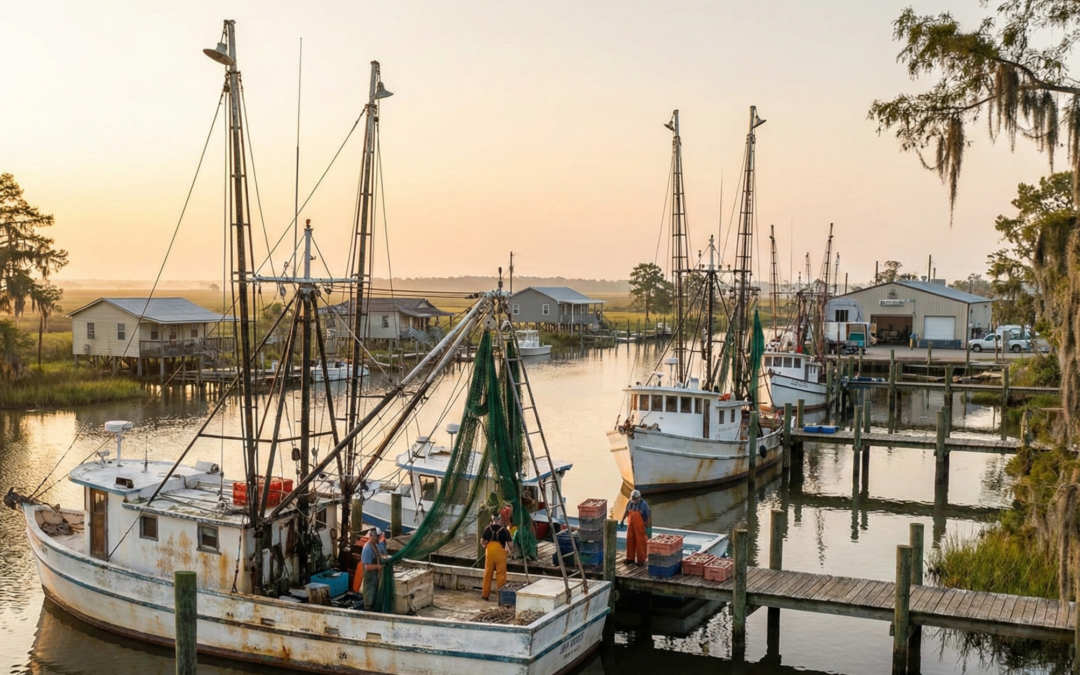
Louisiana’s Gulf Coast has long been synonymous with maritime commerce and culinary tradition. At the heart of this thriving region lies an industry that has shaped the economic, cultural, and social fabric of countless communities: the shrimp trade. For generations, shrimping has been more than just a means of livelihood; it represents a way of life deeply embedded in the Gulf Coast’s identity.
The shrimp industry’s influence extends far beyond the docks and processing plants. It has fundamentally shaped the development of ports, infrastructure, and settlement patterns throughout Louisiana’s coastal parishes. Understanding this economic cornerstone provides insight into how the Gulf Coast became one of America’s most distinctive and vibrant regions.
Historical Development of the Shrimp Industry
The commercial shrimp trade in Louisiana did not emerge overnight. During the early nineteenth century, shrimping was conducted on a small scale, with local fishermen supplying nearby markets. However, the introduction of mechanical harvesting equipment and refrigeration technology in the late 1800s transformed shrimping from a subsistence activity into a major commercial enterprise.
The construction of railroads and improved transportation networks during this period proved instrumental in expanding the market for Louisiana shrimp. What had previously been a local product could now be distributed to distant cities, creating unprecedented demand and opportunities for growth.
Economic Impact on Coastal Communities
The shrimp trade became the lifeblood of Louisiana’s coastal economy. Major ports such as those in Plaquemines Parish, St. Bernard Parish, and Cameron Parish developed around the needs of the shrimping industry. These communities flourished as processing facilities, boatyards, and supply stores emerged to support the expanding fleet of commercial vessels.
The industry created diverse employment opportunities that attracted immigrants and workers from around the world. Italian, Spanish, Vietnamese, and other immigrant communities established themselves in coastal towns, bringing with them their own maritime traditions and cultural practices that enriched the region’s character.
Infrastructure Development
Investment in port facilities and marine infrastructure became essential to maintaining Louisiana’s competitive advantage in the shrimp market. Channels were dredged, docks were constructed, and storage facilities were built to accommodate the volume of shrimp being processed and shipped daily.
This infrastructure development catalyzed broader economic growth. The same ports and facilities that serviced shrimp operations also supported other maritime industries, including fishing for other species, oil and gas exploration, and general cargo transport.
Supporting Industries and Services
The shrimp trade’s growth generated demand for numerous supporting industries and services:
- Boat building and repair services
- Fishing equipment manufacturing and supply
- Ice production and cold storage facilities
- Processing and packaging operations
- Transportation and distribution networks
- Financial services and insurance
Each of these supporting sectors created additional employment and contributed to the overall prosperity of coastal communities.
Cultural Significance and Identity
Beyond its economic dimensions, the shrimp trade has profoundly shaped Louisiana Gulf Coast culture. The industry has influenced local cuisine, folklore, festivals, and community traditions. Seafood restaurants featuring shrimp dishes have become iconic establishments, and recipes passed down through generations often emphasize local shrimp preparations.
Annual celebrations and festivals throughout the region pay homage to the shrimp industry’s importance. These events serve as both cultural touchstones and economic drivers, attracting visitors and reinforcing the pride local residents take in their maritime heritage.
Modern Challenges and Evolution
The Louisiana shrimp industry today faces complex challenges that differ significantly from those of previous eras. International competition, environmental concerns, and changing market conditions have required the industry to adapt and innovate continuously.
Despite these pressures, the shrimp trade remains a vital component of Louisiana’s coastal economy. Contemporary shrimpers employ advanced technology and sustainable practices to maintain their operations while respecting environmental constraints.
Environmental Considerations
Modern shrimping operations increasingly balance commercial interests with environmental stewardship. Efforts to protect wetlands, manage coastal erosion, and maintain healthy marine ecosystems reflect the industry’s recognition that its long-term viability depends on environmental sustainability.
The relationship between the shrimp trade and Louisiana’s coastal environment is complex and interdependent. Healthy marshes and estuaries provide nursery grounds for shrimp populations, making environmental conservation essential to the industry’s future.
The Shrimp Trade’s Enduring Legacy
Louisiana’s Gulf Coast was quite literally built on the shrimp trade. From the capital invested in port infrastructure to the communities that grew around processing plants, from the cultural traditions that celebrate seafood to the maritime expertise passed down through generations, the shrimp industry’s fingerprints are evident throughout the region.
Today, as the industry navigates contemporary challenges, it remains a symbol of Louisiana’s maritime heritage and economic resilience. The Gulf Coast’s continued prosperity depends partly on maintaining the traditions and expertise that made the shrimp trade successful while adapting to modern economic and environmental realities.
Conclusion
The story of Louisiana’s Gulf Coast is fundamentally a story of the shrimp trade. This industry transformed small settlements into thriving port cities, attracted diverse immigrant populations, generated wealth that rippled throughout entire regions, and created a distinctive culture that continues to define the Gulf Coast today. Understanding the centrality of shrimping to Gulf Coast development provides essential context for appreciating the region’s current character and future possibilities. The shrimp trade remains a testament to how natural resources, human enterprise, and maritime expertise can combine to build prosperous, vibrant communities.