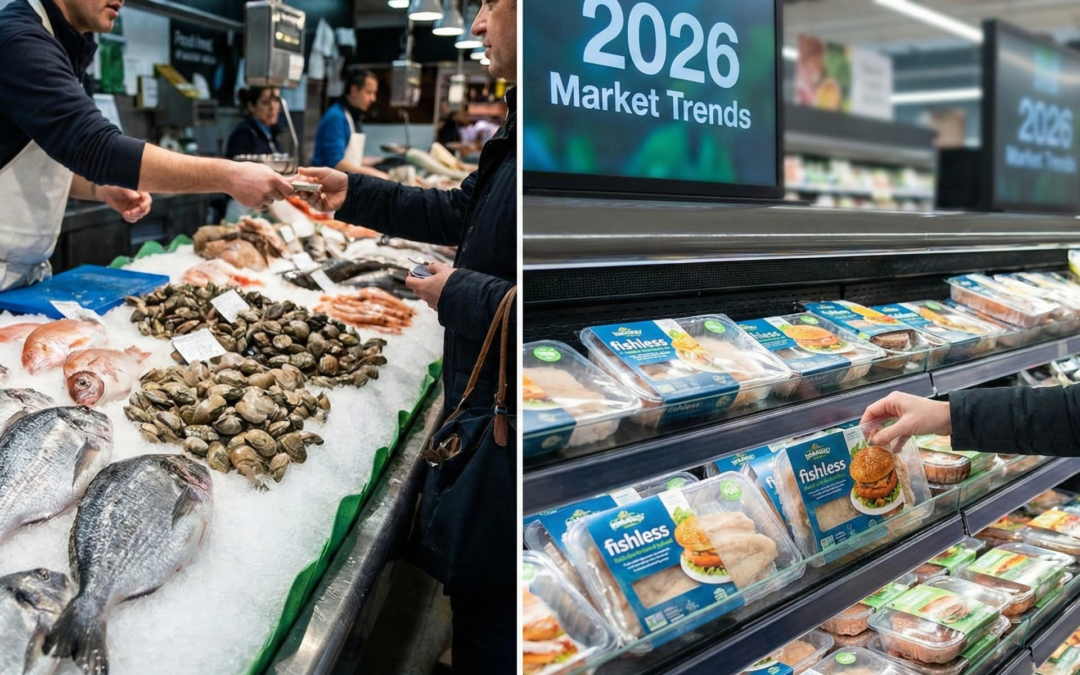
The seafood industry stands at a pivotal crossroads as we approach 2026. The emergence of plant-based seafood alternatives has disrupted traditional markets, forcing consumers and producers alike to reconsider their choices. This comprehensive analysis examines both options to determine which direction the market will ultimately favor.
Understanding Plant-Based Seafood Alternatives
Plant-based seafood represents an innovative sector within the broader alternative protein market. These products utilize advanced food technology to replicate the taste, texture, and nutritional profiles of conventional seafood. Common ingredients include algae, kelp, legumes, and specialized plant-derived proteins designed to mimic fish and shellfish characteristics.
Key Advantages of Plant-Based Seafood
- Environmental sustainability: Significantly lower carbon footprint compared to traditional fishing and aquaculture
- Ocean conservation: Eliminates pressure on declining fish stocks and marine ecosystems
- Food safety: Reduced contamination risks and mercury exposure
- Ethical considerations: Aligns with animal welfare concerns
- Shelf life: Extended storage capabilities without refrigeration requirements
Limitations of Plant-Based Alternatives
- Higher production costs reflected in retail pricing
- Ongoing challenges in achieving authentic taste and texture
- Limited consumer acceptance outside early adopter demographics
- Regulatory ambiguities regarding labeling and nutritional claims
- Concerns about processed ingredients and additives
The Enduring Appeal of Real Seafood
Traditional seafood remains deeply embedded in global culinary traditions and consumer preferences. Real fish and shellfish offer nutritional benefits accumulated through centuries of human consumption, providing omega-3 fatty acids, high-quality proteins, and essential minerals unavailable in comparable quantities elsewhere.
Strengths of Conventional Seafood
- Established nutritional profile: Well-documented health benefits including heart disease prevention
- Consumer familiarity: Deeply rooted cultural significance and culinary applications
- Sensory authenticity: Unmatched taste and texture experiences
- Market accessibility: Wide availability across price points and regions
- Sustainability innovations: Improving aquaculture practices and responsible fishing methods
Challenges Facing Traditional Seafood
- Overfishing concerns and depleting natural fish stocks
- Environmental degradation from industrial fishing operations
- Climate change impacts on marine ecosystems and fish populations
- Rising production costs affecting consumer affordability
- Quality inconsistencies and supply chain vulnerabilities
Market Projections for 2026
Industry analysts project that by 2026, plant-based seafood will capture approximately 5-8% of the global seafood market, while traditional seafood maintains its dominant 92-95% share. This distribution reflects current consumer behavior patterns and market maturity levels.
The plant-based segment, though smaller, demonstrates robust growth rates exceeding 20% annually. However, this growth occurs primarily in developed nations with higher environmental consciousness and disposable income. Conversely, traditional seafood markets experience modest growth concentrated in developing economies with expanding middle-class populations.
The 2026 Winner: A Nuanced Perspective
Declaring a definitive winner in this competition oversimplifies market realities. Rather than a zero-sum competition, 2026 will likely witness a coexistence model where both sectors serve distinct consumer segments and purposes.
Real Seafood as the Market Leader
Traditional seafood emerges as the 2026 winner based on market share, consumer preference, and economic significance. The sector’s substantial infrastructure, established supply chains, and cultural entrenchment provide competitive advantages plant-based alternatives cannot quickly overcome. Real seafood will continue serving mainstream consumers, professional chefs, and traditional food cultures.
Plant-Based Alternatives as the Growth Winner
From a growth perspective, plant-based seafood represents the dynamic sector with greatest expansion potential. Early investors and entrepreneurs positioning themselves in this space stand to benefit from compound annual growth rates significantly outpacing traditional seafood. By 2026, leading plant-based companies will achieve mainstream retail distribution and improved product formulations.
Sustainability and Future Outlook
Environmental pressures will drive increased innovation in both sectors. Traditional seafood producers will invest more heavily in sustainable aquaculture practices, traceability systems, and responsible fishing certifications. Simultaneously, plant-based manufacturers will focus on reducing processing complexity, lowering costs, and improving taste profiles.
The most probable scenario involves a bifurcated market where health-conscious consumers and environmentalists embrace plant-based options while traditional seafood maintains prominence among culinary enthusiasts, nutritionally-focused consumers, and cultural practitioners. Neither sector will vanquish the other by 2026; instead, they will occupy complementary market positions.
Conclusion
The 2026 seafood market winner depends fundamentally on evaluation criteria. Traditional real seafood retains dominance through established market position, consumer loyalty, and nutritional authenticity. Plant-based alternatives emerge as the growth winner, capturing an expanding niche of environmentally and ethically conscious consumers. Rather than a competitive elimination, 2026 will demonstrate market maturation where both options coexist, each serving specific consumer needs and preferences. The seafood industry’s future lies not in determining a singular winner, but in recognizing how diverse consumer priorities drive demand for multiple protein solutions.