Understanding Global Salmon Production Trends
The global salmon industry has experienced unprecedented growth over the past two decades, driven by increasing consumer demand, technological advancements in aquaculture, and expanding market access across Asia, Europe, and North America. As we approach 2030, the competitive landscape of salmon production is evolving rapidly, with several nations positioning themselves as dominant market leaders.
Current Market Leaders in Salmon Production
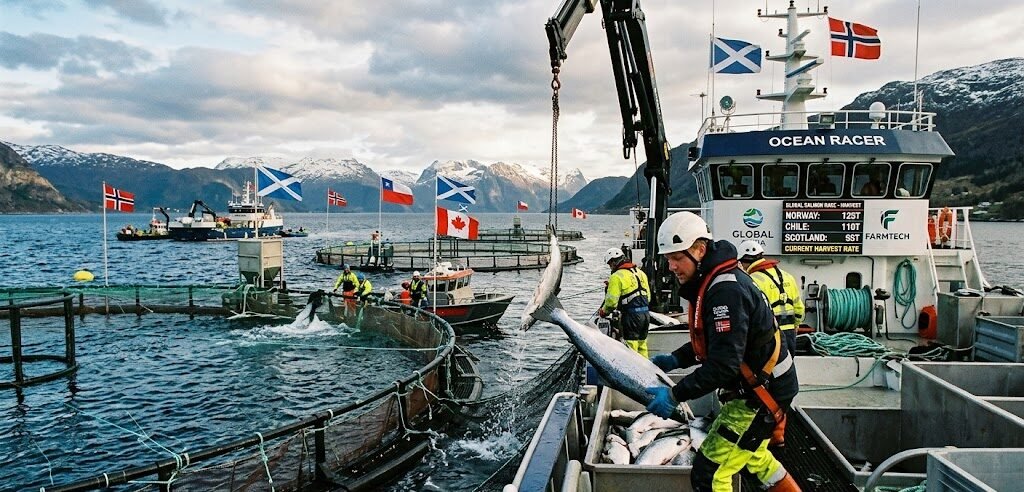
Norway continues to maintain its position as the world’s largest salmon producer, accounting for approximately 50% of global farmed salmon supply. The Norwegian salmon industry has established itself through decades of innovation, rigorous quality standards, and sustainable farming practices. However, this dominance is increasingly being challenged by emerging producers with lower operational costs and expanding production capacity.
Chile, the second-largest producer, has significantly increased its market share over the past decade. The country’s favorable climate conditions, extensive coastlines, and investment in modern aquaculture infrastructure have enabled rapid production growth. Strategic expansion initiatives and technological improvements continue to strengthen Chile’s competitive position in international markets.
Emerging Contenders for Market Leadership
India and Asia-Pacific Region
The Asia-Pacific region represents the fastest-growing salmon production sector globally. India, in particular, has emerged as a significant player through substantial investments in cold-water aquaculture and export infrastructure. With government support for aquaculture development and increasing domestic consumption, India is positioned to substantially increase its salmon production capacity by 2030.
Canada’s Strategic Positioning
Canada possesses significant untapped potential in salmon farming, with extensive water resources and established expertise in cold-water aquaculture. British Columbia and other provinces are investing in sustainable farming technologies and automation, positioning Canada to increase its global market share considerably.
Factors Driving Production Growth by 2030
- Technological Innovation: Automated feeding systems, real-time monitoring technologies, and genetic improvements are enhancing production efficiency and reducing environmental impact across all major producing nations.
- Sustainability Initiatives: Stricter environmental regulations and consumer demand for responsibly farmed salmon are driving industry-wide improvements in waste management, disease control, and feed efficiency.
- Growing Global Demand: Rising disposable incomes in developing nations and increasing health consciousness are driving salmon consumption upward, particularly in Asia and Latin America.
- Infrastructure Development: Significant capital investments in processing facilities, cold chain logistics, and port facilities in emerging producing countries are enabling scale expansion.
- Regulatory Improvements: Clearer regulatory frameworks and certifications are providing pathways for new producers to enter the market while maintaining quality and sustainability standards.
Production Capacity Projections
Industry analysts project that global salmon production will exceed 4.5 million metric tons by 2030, representing a 30% increase from current levels. This growth will be distributed across multiple producing nations rather than concentrated among traditional leaders. Norway is expected to maintain its leadership position with enhanced sustainability measures, while Chile will likely increase its production share through continued expansion and investment.
India and other Asia-Pacific nations are anticipated to capture 15-20% of global production by 2030, driven by lower production costs, abundant water resources, and government support for aquaculture sectors. Canada is positioned to become the third-largest producer, leveraging its technological expertise and environmental advantages.
Challenges and Competitive Pressures
Despite growth projections, salmon producers face several challenges that will influence competitive outcomes by 2030. Disease management, particularly sea lice infestations and infectious salmon anemia, continues to threaten production stability. Climate change impacts on water temperature and quality pose additional risks to production sustainability.
Environmental concerns regarding escapes, waste management, and impacts on wild salmon populations remain contentious issues in established producing regions. Meeting increasingly stringent environmental standards may increase operational costs for some producers, potentially affecting their competitive positions.
Supply chain disruptions, input cost volatility, and geopolitical factors also influence production decisions and market access for different nations. Companies and nations that successfully navigate these challenges while maintaining product quality will secure leadership positions.
Conclusion and Future Outlook
The global salmon production landscape by 2030 will be characterized by greater geographic diversification, with established leaders maintaining strong positions while emerging producers capture increasing market share. Success will depend on balancing production growth with environmental sustainability, maintaining product quality, and adapting to evolving consumer preferences and regulatory requirements. Nations and companies that invest in innovation, infrastructure, and sustainable practices will emerge as the dominant leaders in this increasingly competitive and dynamic industry.