
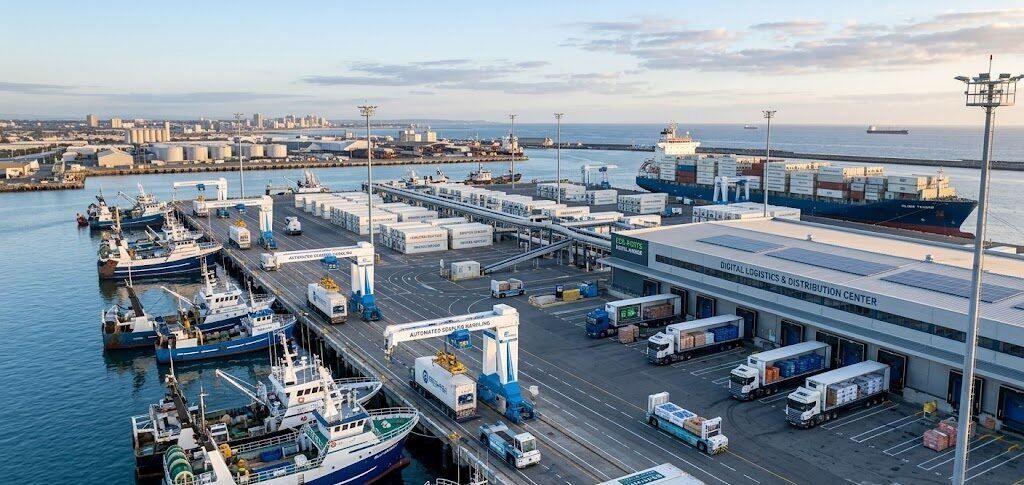
Introduction to Smart Ports in Seafood Logistics
The maritime industry stands at the threshold of a technological revolution. Smart ports, equipped with advanced automation, artificial intelligence, and Internet of Things (IoT) technologies, are fundamentally transforming how seafood products move from ocean to market. This transformation addresses critical challenges in traditional port operations, including inefficiency, waste, and quality degradation of perishable goods.
As global seafood demand continues to rise, the logistics sector faces mounting pressure to deliver fresher products faster while reducing operational costs and environmental impact. Smart ports represent the solution to these interconnected challenges, offering unprecedented levels of visibility, control, and optimization throughout the seafood supply chain.
Understanding Smart Port Technology
Smart ports integrate cutting-edge technologies to create intelligent, responsive port ecosystems. These facilities leverage multiple technological components working in concert to streamline operations and enhance efficiency.
Key Technologies Driving Smart Ports
- Automated Cargo Handling: Robotic systems and automated guided vehicles (AGVs) manage loading, unloading, and movement of seafood containers with precision and speed, reducing human error and operational time.
- Real-Time Tracking Systems: GPS and RFID technologies enable continuous monitoring of shipments, providing stakeholders with accurate location and condition data throughout transit.
- IoT Sensors: Temperature, humidity, and quality sensors maintain optimal conditions for perishable seafood, preventing spoilage and ensuring product integrity.
- Artificial Intelligence and Analytics: Machine learning algorithms predict demand, optimize routing, and identify operational inefficiencies before they impact deliveries.
- Blockchain Integration: Distributed ledger technology creates transparent, immutable records of seafood provenance, ensuring traceability and regulatory compliance.
- Cloud Computing Infrastructure: Centralized data management enables seamless coordination between port operators, shipping companies, and distributors across global networks.
Benefits for Seafood Supply Chain Management
The implementation of smart port technologies delivers substantial advantages across multiple dimensions of seafood logistics operations.
Enhanced Product Quality and Freshness
Maintaining optimal storage conditions throughout the supply chain is paramount for seafood products. Smart ports employ sophisticated cold chain management systems that continuously monitor and adjust temperature and humidity levels. IoT sensors provide real-time alerts when conditions deviate from specifications, enabling immediate corrective action. This technological oversight significantly extends shelf life and preserves the nutritional value and sensory qualities of seafood products, ultimately delivering superior products to consumers.
Operational Efficiency and Cost Reduction
Automation reduces the time seafood spends in port facilities, a critical factor for perishable goods. Automated systems operate continuously without fatigue, executing loading and unloading operations with consistent precision. Intelligent scheduling algorithms optimize vessel berthing sequences and equipment allocation, minimizing idle time and maximizing throughput. These improvements translate into reduced handling costs, lower labor expenses, and decreased operational overhead.
Improved Traceability and Food Safety
Regulatory compliance and consumer safety represent non-negotiable priorities in seafood logistics. Smart ports implement comprehensive traceability systems that document every stage of the supply chain journey. Blockchain technology creates an immutable record of product origin, handling procedures, and environmental conditions, enabling rapid identification and containment of safety issues. This transparency builds consumer confidence while simplifying compliance with international food safety regulations.
Environmental Sustainability
Smart port technologies contribute significantly to environmental objectives. Optimized routing and scheduling reduce vessel transit times and fuel consumption. Efficient cargo handling minimizes product waste and associated environmental impacts. Real-time monitoring enables early detection of spills or leaks, preventing environmental contamination. These operational improvements align maritime logistics with global sustainability commitments while reducing the industry’s carbon footprint.
Real-World Applications and Case Studies
Leading global ports have successfully implemented smart technologies, demonstrating measurable improvements in seafood logistics operations. These implementations showcase the practical benefits of technological integration in port environments.
Progressive port facilities have reported significant reductions in vessel turnaround times, with some achieving improvements exceeding 30 percent. Automated handling systems consistently maintain cold chain integrity, reducing product spoilage rates substantially. Real-time tracking systems provide supply chain visibility that enables better demand forecasting and inventory management downstream, reducing waste throughout the distribution network.
These success stories validate the business case for smart port investments while establishing best practices that other facilities can replicate and adapt to their specific operational contexts.
Challenges and Implementation Considerations
While the potential benefits are substantial, implementing smart port technologies presents legitimate challenges that stakeholders must carefully navigate.
Capital Investment Requirements
Deploying comprehensive smart port infrastructure demands significant upfront investment in equipment, systems integration, and infrastructure upgrades. Ports must develop compelling financial models demonstrating adequate return on investment to justify capital expenditures and secure necessary funding.
Technical Integration Complexity
Integrating diverse technologies from multiple vendors into cohesive operational systems presents substantial technical challenges. Legacy port systems must be updated or replaced to accommodate new technologies, requiring careful planning and execution to minimize operational disruption.
Workforce Adaptation
Technological displacement of traditional port labor necessitates comprehensive workforce development programs. Ports must invest in training and retraining initiatives enabling workers to transition into roles supporting smart port operations, addressing both employment concerns and skill gaps.
Regulatory and Standards Alignment
Emerging smart port technologies operate within a complex regulatory environment that continues to evolve. Ports must ensure compliance with international maritime regulations, food safety standards, and data privacy requirements while anticipating regulatory changes that may impact operations.
Future Outlook and Industry Trends
The trajectory of smart port development points toward increasingly sophisticated technological integration and expanded global adoption. Several emerging trends will shape the future of seafood logistics.
Autonomous vessel technology, currently in development stages, promises to eliminate human errors in navigation while optimizing fuel consumption and routing decisions.