Understanding Seafood Certifications
As consumers become increasingly conscious about their purchasing decisions, seafood certifications have emerged as critical indicators of quality, sustainability, and safety. These labels serve as third-party verification that seafood products meet established standards for environmental responsibility, worker welfare, and food safety. Understanding which certifications matter most can help consumers make informed choices while supporting ethical fishing practices and marine conservation efforts.
The Marine Stewardship Council (MSC) Certification
The Marine Stewardship Council certification stands as one of the most recognized and respected seafood labels globally. MSC certification indicates that seafood has been sourced from fisheries that maintain healthy fish stocks, minimize environmental impact, and operate under effective management systems. The organization evaluates fisheries against rigorous scientific standards, ensuring that fishing practices do not deplete marine resources or damage ecosystems.
Products bearing the MSC blue fish label provide consumers with confidence that their seafood purchase supports sustainable fishing methods. This certification applies to wild-caught seafood and has become particularly influential in European and North American markets, where environmentally conscious consumers actively seek out certified products.
Aquaculture Stewardship Council (ASC) Certification
For farmed seafood products, the Aquaculture Stewardship Council certification represents the leading standard for responsible aquaculture. ASC certification ensures that fish and shellfish farms operate sustainably, protect local ecosystems, treat workers fairly, and maintain high animal welfare standards. The certification process involves comprehensive audits covering environmental, social, and economic criteria.
ASC-certified farms must demonstrate compliance with strict feed sourcing requirements, disease management protocols, and chemical usage restrictions. This certification has become increasingly important as global aquaculture production expands to meet growing seafood demand. Consumers choosing ASC-certified farmed seafood can feel confident they are supporting responsible farming practices that minimize environmental degradation.
Best Aquaculture Practices (BAP) Certification
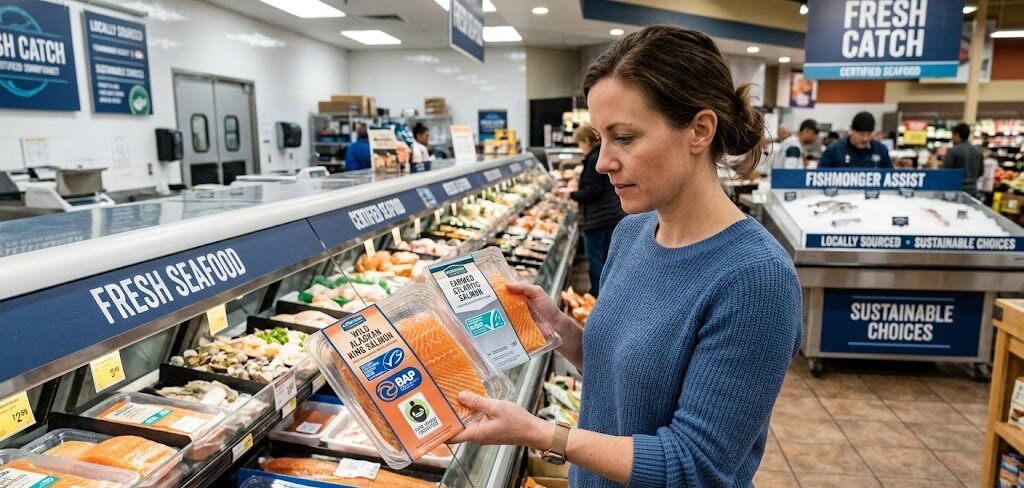
The Best Aquaculture Practices certification focuses primarily on food safety and quality assurance in farmed seafood production. BAP certification assesses hatcheries, farms, processing plants, and feed mills to ensure they meet rigorous standards for animal health, food safety, and environmental responsibility. This multi-tiered certification system provides comprehensive oversight of the entire aquaculture supply chain.
BAP-certified operations undergo regular audits and must maintain documentation demonstrating compliance with food safety protocols and sustainable farming practices. For consumers prioritizing food safety and quality alongside environmental considerations, BAP certification offers valuable assurance that products have been produced under stringent quality control measures.
Seafood Watch Recommendations
While not a certification label per se, the Monterey Bay Aquarium’s Seafood Watch program provides consumer recommendations based on scientific analysis of fishing and farming practices. Seafood Watch categorizes seafood as “Best Choices,” “Good Alternatives,” or “Avoid” based on sustainability and environmental impact criteria. This resource-driven approach helps consumers navigate purchasing decisions without necessarily relying on product labels alone.
Seafood Watch recommendations reflect regional differences in fishing practices and environmental conditions, making them particularly valuable for consumers seeking location-specific sustainability guidance. Many restaurants and retailers now prominently display Seafood Watch recommendations alongside products, facilitating easier identification of sustainable options.
Friend of the Sea Certification
Friend of the Sea provides an independent certification for both wild-caught and farmed seafood products, emphasizing marine conservation and sustainability. This certification requires adherence to strict environmental standards, including protection of endangered species, prevention of overfishing, and maintenance of ecosystem health. Friend of the Sea certification is particularly prominent in European markets and appeals to environmentally conscious consumers.
The certification process evaluates fishing methods, bycatch reduction, habitat protection, and compliance with international fishing regulations. Products bearing the Friend of the Sea logo indicate that manufacturers have invested in verifiable sustainability practices and environmental stewardship.
The Global Aquaculture Alliance (GAA) Standards
The Global Aquaculture Alliance establishes comprehensive standards for responsible aquaculture through its certification programs, with BAP being the most widely recognized. GAA standards address environmental management, food safety, social responsibility, and animal welfare across aquaculture operations. These standards have been developed through extensive stakeholder consultation and scientific research.
GAA-certified facilities demonstrate commitment to reducing environmental footprints, protecting water quality, and minimizing disease transmission to wild fish populations. The alliance’s work has significantly influenced global aquaculture practices, promoting industry-wide improvements in sustainability and social responsibility.
Key Considerations When Evaluating Certifications
Several factors should guide consumer decision-making when selecting seafood based on certifications:
- Third-Party Verification: Prioritize certifications from independent organizations rather than industry self-certification programs, which may lack objectivity.
- Transparency: Reputable certification bodies publish detailed standards and audit results, allowing consumers to understand specific requirements.
- Scientific Basis: Look for certifications developed using rigorous scientific methodology and regularly updated to reflect current understanding of marine conservation.
- Geographic Relevance: Consider whether the certification accounts for regional environmental and social conditions relevant to specific fishing or farming practices.
- Supply Chain Accountability: Choose certifications that monitor the entire supply chain from production through processing and distribution.
The Impact of Seafood Certifications
Seafood certifications have demonstrably influenced fishing and farming practices globally. Certified operations have reduced bycatch, improved worker conditions, and implemented better environmental management practices. The presence of certification labels on supermarket shelves has educated consumers about sustainability issues and created market demand for responsibly sourced seafood.
Major retailers and foodservice providers increasingly require suppliers to obtain relevant certifications, creating financial incentives for operations to adopt sustainable practices. This market-driven approach has proven effective in promoting positive change throughout the seafood industry without requiring government mandates.